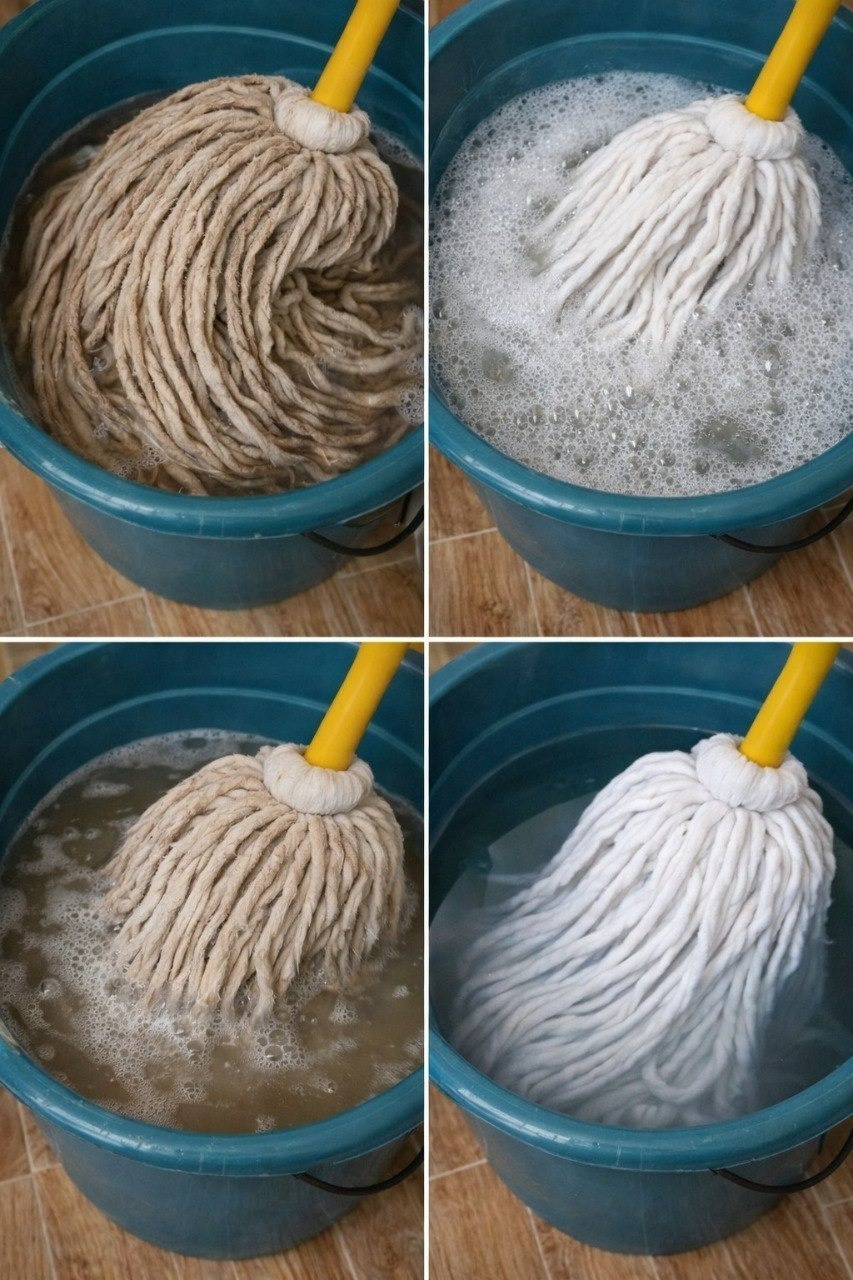

Mops work hard to keep your floors spotless—but when was the last time you cleaned it?
A neglected mop doesn’t just look unappealing; it redistributes dirt, bacteria, and odors across your home with every pass. The good news? Most mops don’t need replacing—they need reviving. With a few pantry staples and 30 minutes of attention, you can restore even a heavily soiled mop to fresh, hygienic condition—saving money and reducing waste in the process.
That trusty mop has been working hard for you. Give it the care it deserves.
When to Wash vs. When to Replace
When to wash and recycle your mop: Most mops can be cleaned and reused many times before they need replacing. If the fibers are intact and the mop head is still attached securely, it can be revived.
When to throw it away: A mop should only be discarded when it is irreversibly worn out—fibers are frayed beyond cleaning, the head is falling apart, or the handle is damaged. Otherwise, it’s worth cleaning.
Why Mop Hygiene Matters
Mops absorb more than just dirt—they trap moisture, skin cells, food particles, and microbes. Without proper cleaning, they become breeding grounds for bacteria and mildew, undermining their very purpose.
After each use:
- Rinse thoroughly under warm running water
- Wring completely dry
- Hang to air-dry in a well-ventilated area
-
Never store damp—this invites odor and mold
- A well-maintained mop stays effective for months.
- The Secret Ingredient: Distilled White Vinegar
- That’s right—the humble white vinegar sitting in your pantry is the magic solution for reviving a dirty mop.
- Why vinegar works:
- Naturally antibacterial – Kills many common bacteria
- Cuts through grease and grime
-
Neutralizes odors (doesn’t just cover them)
-
Breaks down mineral deposits from hard water
-
Environmentally friendly and cheap
- How to Deep Clean Your Mop
- Method 1: For Removable Mop Heads (Washable)
- What you’ll need:
- Hot water
- 1 cup white vinegar
- ¼ cup baking soda (optional, for extra cleaning power)
-
Laundry detergent
- Steps:
-
Remove the mop head if possible.
-
Rinse under hot water to remove loose debris.
-
Fill a bucket or sink with hot water, add 1 cup vinegar, and a squirt of laundry detergent.
-
Soak for 30-60 minutes. (For heavily soiled mops, add ¼ cup baking soda for extra fizzing action.)
-
Scrub gently with your hands or a brush.
-
Rinse thoroughly until water runs clear.
-
Wring out completely.
-
Air dry in a well-ventilated area—never store damp.
- Method 2: For Sponge Mops
- What you’ll need:
-
Hot water
-
1 cup white vinegar
-
1 tablespoon dish soap
- Steps:
-
Rinse the sponge under hot water.
-
Fill a bucket with hot water, vinegar, and dish soap.
-
Submerge the sponge and let soak for 30 minutes.
-
Squeeze the sponge repeatedly to work the solution through.
-
Rinse thoroughly.
-
Wring out completely and air dry.