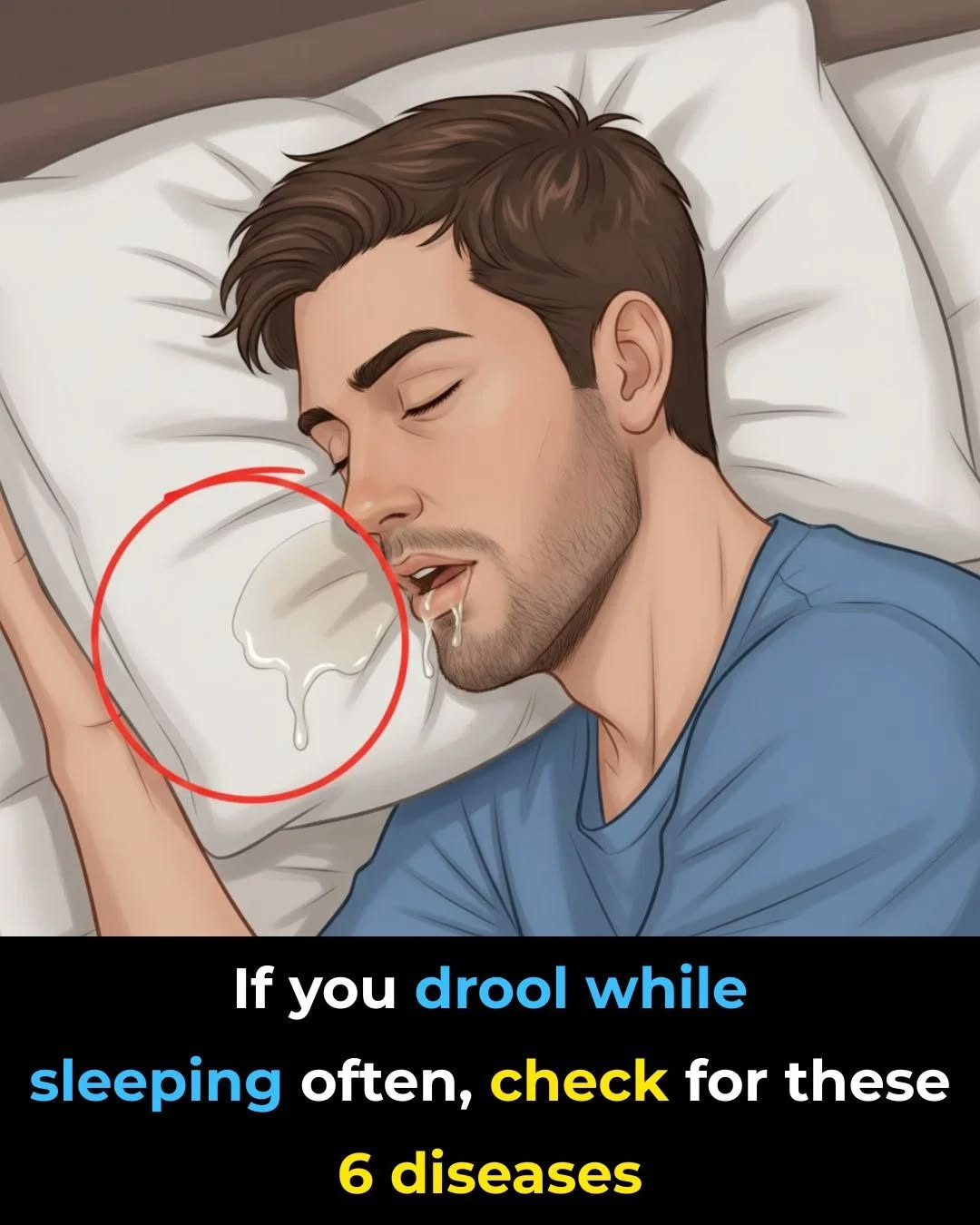

Waking up to a damp pillowcase is a common, often embarrassing, experience that most of us brush off as a sign of deep sleep. While occasional drooling is perfectly normal—especially if you sleep on your side or are fighting a stuffy nose—frequent, excessive drooling (sialorrhea) can be a red flag from your nervous system or muscles. It’s not about the drool itself, but what it may indicate about your body’s ability to manage saliva while you’re unconscious.
If you or a loved one consistently drools during sleep, it’s worth being aware of these six potential underlying conditions. This information is for awareness and should not replace a consultation with a healthcare professional.
1. Sleep Apnea (Obstructive Sleep Apnea – OSA)
The Connection: OSA causes repeated pauses in breathing during sleep. The body’s natural response is to open the mouth to take in more air. This jaw-dropping posture, combined with relaxed facial muscles, allows saliva to escape easily.
Other Key Signs to Watch For:
- Loud, chronic snoring punctuated by gasps or silent pauses.
-
Waking up choking or gasping for air.
-
Excessive daytime sleepiness and fatigue, despite a full night’s sleep.
-
Morning headaches and dry mouth.
2. Gastroesophageal Reflux Disease (GERD)
The Connection: Stomach acid creeping up into the esophagus can trigger a reflex that produces excess saliva (water brash) as the body tries to neutralize the acid. This excess saliva can pool and leak during sleep.
Other Key Signs to Watch For:
- Heartburn or a burning sensation in the chest, often after eating or at night.
-
Regurgitation of sour liquid or food.
-
Chronic cough, especially at night.
-
A feeling of a lump in the throat (globus sensation).
3. Neurological Disorders (Parkinson’s Disease, Stroke, Bell’s Palsy)
The Connection: These conditions can impair the nerves and muscles involved in swallowing (dysphagia) and in maintaining lip seal. The brain may not effectively signal the throat to swallow accumulated saliva.
Other Key Signs to Watch For:
-
Parkinson’s: Tremors at rest, muscle rigidity, slow movement, reduced facial expression.
-
Post-Stroke: Sudden weakness/numbness on one side, slurred speech, facial droop.
-
Bell’s Palsy: Sudden weakness or paralysis on one side of the face, difficulty closing one eye.
4. Sinus or Throat Infections (Tonsillitis, Strep Throat)
The Connection: Infections cause inflammation and pain in the throat. Swallowing becomes painful, so the body may subconsciously avoid it during sleep, leading to saliva pooling and drooling. A severely stuffy nose also forces mouth breathing.
Other Key Signs to Watch For:
-
Severe sore throat, red/white patches on tonsils.
-
Fever and swollen lymph nodes.
-
Nasal congestion and post-nasal drip.
5. Side Effect of Certain Medications
The Connection: Some medications, particularly certain antipsychotics (e.g., clozapine), some antibiotics, and cholinesterase inhibitors used for Alzheimer’s, can increase saliva production as a side effect.
What to Do: Review your medication list with your doctor or pharmacist. Never stop taking prescribed medication without medical guidance.
6. Problems with Teeth or Dental Alignment
The Connection: Ill-fitting dentures, dental appliances, or significant tooth decay can irritate the mouth and stimulate saliva production. Misaligned teeth can also affect how easily the lips seal at rest.
Other Key Signs to Watch For: