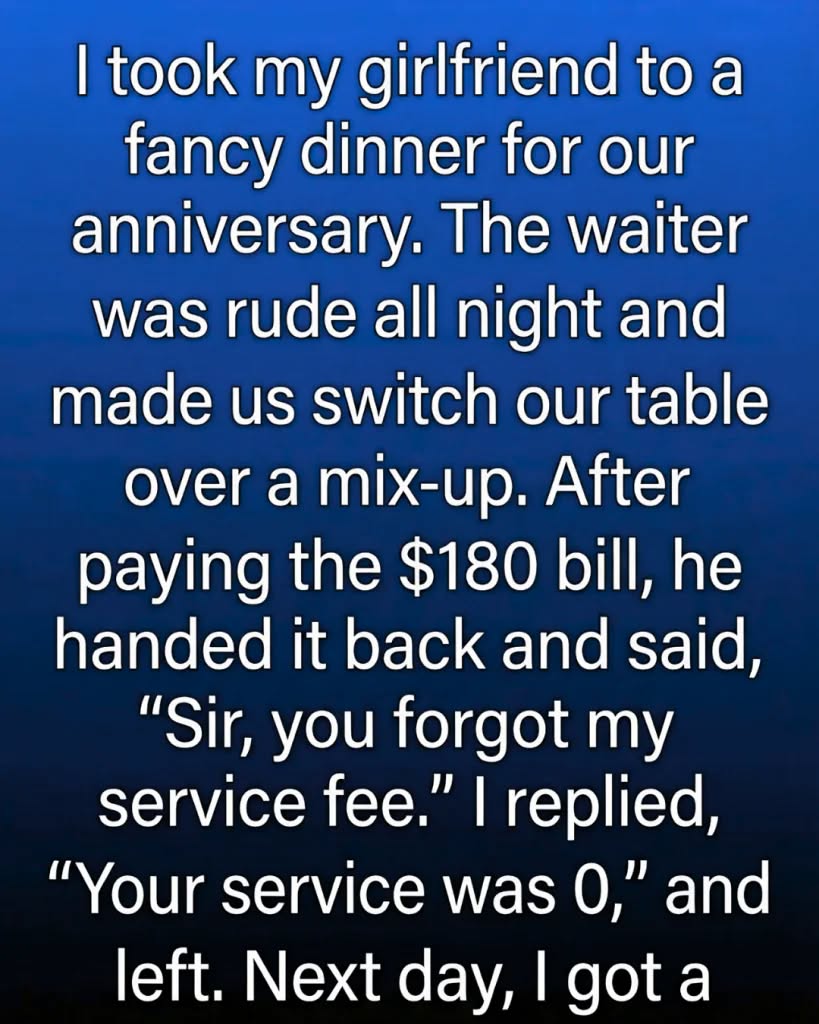
I had spent weeks planning a special evening—saving up and choosing an elegant, quiet restaurant to celebrate how far my girlfriend and I had come. The night started exactly as I imagined, soft lighting and easy conversation making everything feel like it belonged to just us.
But the atmosphere began to crack almost immediately when our waiter was abrupt and impatient. What was meant to be a celebration slowly turned uncomfortable as we were treated like an inconvenience rather than guests. Even small requests were met with sighs or irritation, and mid-meal we were moved tables due to an unexplained “mistake,” which only made things worse.
My girlfriend tried to reassure me under the table, but the service kept pulling the night out of rhythm. By the time the $180 bill arrived, the entire evening felt diminished.
When the waiter returned and prompted me about a service fee I had left off, I stayed calm.
“I’m not leaving a tip,” I said. “The service wasn’t acceptable.”
We left without arguing further.
On the drive home, my girlfriend and I talked about how moments like that reveal boundaries more than they reveal restaurants. It wasn’t really about money—it was about respect, and how quickly it can shape an entire experience.
The next afternoon, the restaurant manager called to apologize after I calmly explained what had happened. He admitted the fault was on their side and offered a sincere apology.
The dinner wasn’t what I had planned, but it left me with something clearer: dignity doesn’t need volume, and respect—once lost—can’t be replaced with good intentions after the fact.