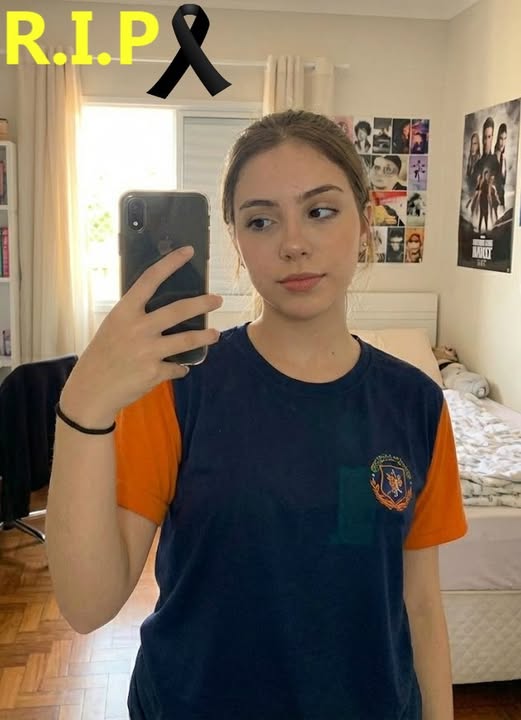

Ana’s death did not happen in a single moment. It unfolded slowly, quietly, and almost invisibly—hidden beneath assumptions, cultural habits, and a dangerous normalization of pain that far too many women are taught to accept without question. What makes her story so devastating is not just that she died at twenty, but that there were warnings—clear, escalating signals from her body—that were repeatedly minimized, misunderstood, or endured in silence.
She should have been at the beginning of everything. At twenty, life is usually defined by expansion—new goals, new independence, the slow shaping of identity. Instead, Ana’s final months became a narrowing corridor of discomfort, confusion, and worsening symptoms that never received the urgency they demanded. Her world didn’t collapse overnight; it tightened gradually, as what seemed “manageable” turned into something far more dangerous.
It began the way it begins for many women: with pain that didn’t immediately seem extraordinary. Strong cramps. Fatigue. A sense that something was off, but not dramatically so. These are symptoms that, in isolation, rarely trigger alarm. In fact, they are often dismissed outright—by society, by peers, and sometimes even by medical professionals—as routine aspects of reproductive health.
That’s where the real danger lies.
There is a deeply ingrained expectation that women will tolerate discomfort, especially when it relates to their bodies. From a young age, many are taught—explicitly or implicitly—that pain during menstruation is normal, that exhaustion is just part of life, that pushing through is a sign of strength. Over time, this messaging becomes internalized. It teaches women not just to endure pain, but to question whether their pain is worth mentioning at all.
Ana did what many people in her position would do: she adapted. She kept going. She adjusted her days around the discomfort, likely telling herself that it would pass, that it wasn’t serious enough to warrant alarm. When symptoms persist but don’t yet incapacitate, it’s easy to rationalize them. Life doesn’t pause, and neither did she.
But her body was already signaling that something was wrong.
As the weeks went on, the symptoms intensified. The fatigue deepened into something heavier—less like tiredness and more like a constant fog. Dizziness crept in, disrupting her sense of stability. The pain became sharper, more insistent, less predictable. These were not subtle changes. They were escalations.
And yet, the framework she—and many others—operated within didn’t change.
Pain like this is often filtered through a lens that diminishes its urgency. When a young woman reports severe cramps or pelvic discomfort, the default assumption is frequently benign. Stress. Hormones. A “bad cycle.” Even when symptoms worsen, the interpretation often lags behind reality. This is part of a broader issue sometimes described as the “pain gap”—a pattern in which women’s reports of pain are taken less seriously, investigated less aggressively, and treated less urgently than they should be.
In practical terms, that means delays.
Delays in seeking care. Delays in being taken seriously. Delays in diagnosis.
And in Ana’s case, those delays proved catastrophic.
By the time the situation reached a crisis point, the underlying condition—whatever its exact nature—had progressed beyond the stage where intervention could easily reverse it. What had once been manageable symptoms had evolved into a full medical emergency. The shift from “something’s wrong” to “something is critically wrong” happened fast, but it didn’t come out of nowhere. It had been building, quietly, for weeks or months.
When she finally received emergency care, the medical team was no longer working with early warning signs—they were confronting the aftermath. At that stage, medicine becomes reactive instead of preventive. Options narrow. Outcomes worsen.
Her death was not just the result of a single condition. It was the result of a chain of normalization, hesitation, and missed escalation points.
That’s what makes it a systemic failure.
In the aftermath, her family has been forced into a reality no one should have to navigate—trying to make sense of a loss that feels both sudden and preventable. Grief, in cases like this, often carries an added layer: the question of “what if.” What if the symptoms had been recognized earlier? What if someone had insisted on further testing? What if the pain had been treated as a warning instead of an inconvenience?
Those questions don’t have satisfying answers. But they do have implications.
Because Ana’s story is not isolated.
Across different countries and healthcare systems, similar patterns appear again and again. Young women presenting with serious conditions—ranging from ruptured cysts to internal bleeding, infections, or cancers—are initially told that their symptoms are normal, or at least not urgent. By the time the severity is recognized, the situation is often far more complicated than it needed to be.
This is not about blaming individuals. It’s about examining the environment that shapes decisions—both personal and medical.
Culturally, there is still a strong tendency to frame women’s pain as something expected, even inevitable. Medically, there are gaps in how symptoms are prioritized and investigated. Personally, many women have been conditioned to second-guess their own experiences, to wait longer than they should before seeking help, or to accept reassurance even when something still feels wrong.
All of these factors intersect.
And sometimes, as in Ana’s case, the result is irreversible.
Her family’s response has been to turn grief into advocacy—not as a symbolic gesture, but as a practical necessity. They are emphasizing something deceptively simple: not all pain is normal, even if it’s common. There is a difference between discomfort and danger, and learning to recognize that difference can save lives.
Symptoms like persistent or worsening pain, unexplained fatigue, dizziness, fainting, or changes that don’t respond to basic treatment are not things to quietly endure. They are signals. And signals require attention.
At the same time, there is a parallel responsibility within healthcare systems—to listen more carefully, to investigate more thoroughly, and to move beyond assumptions that have historically minimized women’s experiences. Believing patients, especially when they report something is wrong, is not a courtesy. It’s a critical part of effective care.
Ana’s story leaves behind a difficult but necessary message.
The body rarely fails without warning. More often, it speaks—gradually, persistently, sometimes quietly. The tragedy is not just that those signals existed, but that they were filtered through a system that didn’t amplify them soon enough.
What her story demands is not fear, but awareness. Not panic, but attention. A shift away from endurance as the default response, and toward action when something feels off.
Because no one should have to lose their life to something that was mistaken for something “normal.”