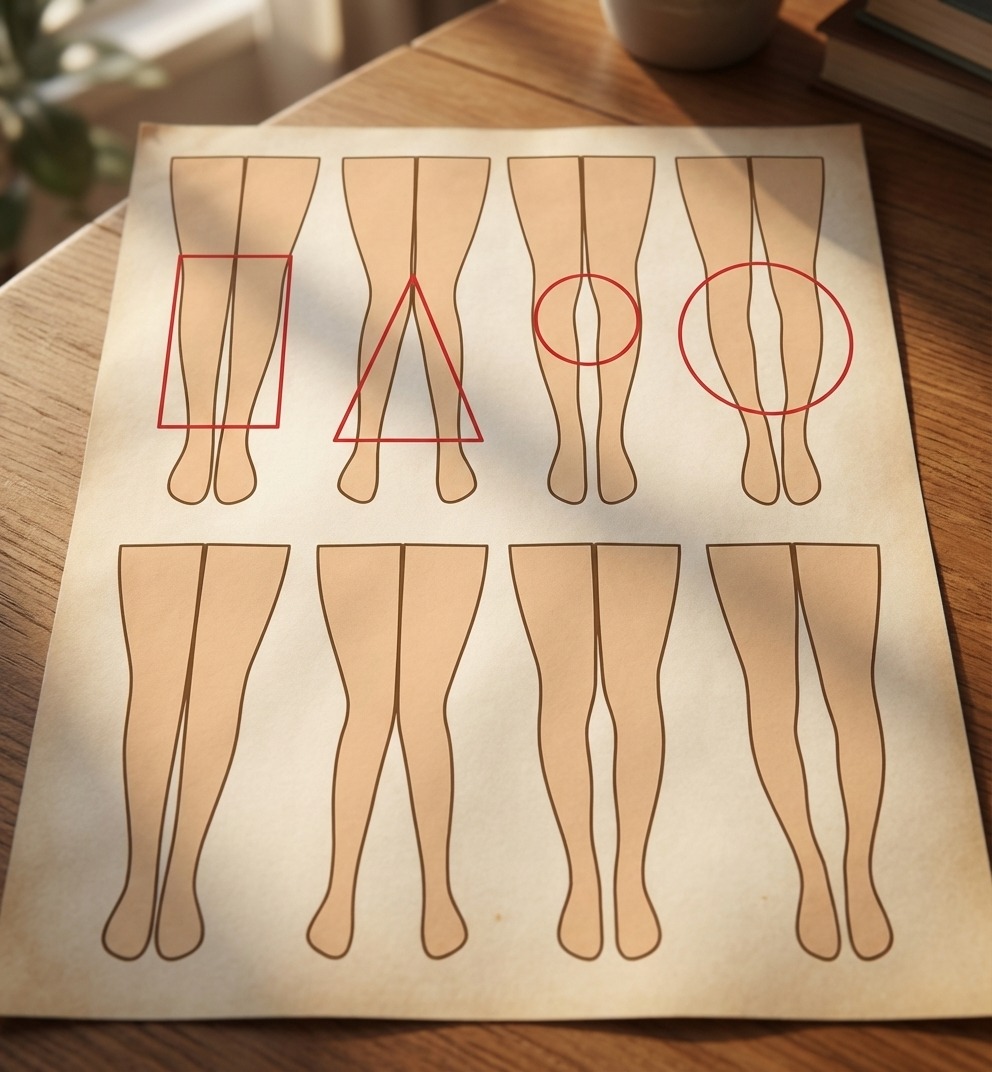
 Most people think leg shape is only about appearance, but experts say the natural alignment of your legs can actually reveal important information about your body structure, posture, and overall health. From knee position to muscle distribution, the way your legs stand together may reflect how your joints, bones, and muscles work as a system.
One common leg type is straight alignment, where the thighs, knees, calves, and ankles touch evenly. This is considered a neutral structure and usually indicates balanced weight distribution across the joints. People with this alignment often experience less strain on their knees and hips when walking or standing for long periods.
Another pattern is the “knock-knee” shape, where the knees touch but the ankles remain apart. This alignment can place extra pressure on the inner knee joint over time. While mild cases are common and harmless, more pronounced alignment may lead to joint discomfort, especially with age or excess weight.
The opposite structure is the “bow-leg” shape, where the ankles touch but the knees stay apart. This pattern shifts pressure to the outer knee area and can sometimes affect walking mechanics or balance if the angle is significant. In some cases, it may be linked to joint wear later in life.
Some people also have variations caused by muscle imbalance or posture habits rather than bone structure. Weak hip muscles, poor sitting posture, or uneven weight distribution can gradually change the appearance of the legs and affect how the body moves during everyday activities.
The important thing to understand is that leg shape isn’t about beauty standards — it’s about body mechanics. If alignment causes pain, fatigue, or instability, strengthening exercises, posture correction, supportive footwear, or physical therapy can help improve comfort and prevent long-term joint problems.
Your legs don’t just support your body — they tell the story of how your body carries weight, maintains balance, and moves through life. Paying attention to their alignment can be the first step toward protecting your mobility and overall health for years to come.