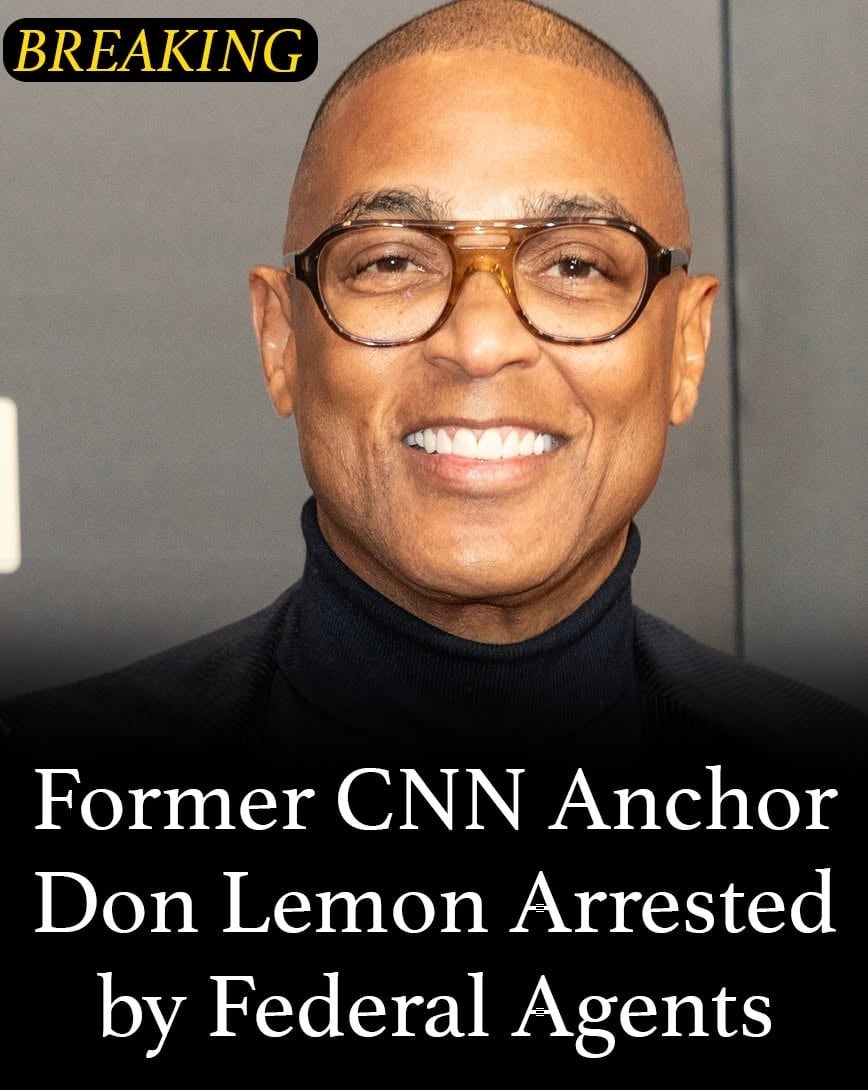
Former CNN anchor and seasoned journalist Don Lemon was arrested by federal authorities in Los Angeles on the evening of January 29, 2026, while he was in town covering the 68th Annual Grammy Awards. The arrest was confirmed by his attorney and reported by multiple major news outlets, marking a dramatic moment in what has already become one of the most unusual legal confrontations involving a prominent American journalist in recent years.
The legal actions against Lemon stem from his presence at a controversial anti-ICE protest in St. Paul, Minnesota, on January 18, 2026. On that day, a group of demonstrators entered Cities Church during a Sunday worship service. The protest drew national attention because it disrupted a religious service and was part of broader demonstrations against federal immigration enforcement policies. Lemon was present and filmed part of the protest; he livestreamed and interviewed both demonstrators and congregants.
Protesters targeted Cities Church because one of its leaders is believed to have been serving in a senior role with U.S. Immigration and Customs Enforcement (ICE). The disruption included chanting and direct confrontation during worship, which led federal authorities to investigate possible violations of federal law regarding interference with religious services.
On January 29, a federal grand jury unsealed an indictment charging Lemon and several others with conspiracy and violating the Freedom of Access to Clinic Entrances (FACE) Act, a federal law that can apply to obstructing access to places of worship in addition to other protected facilities. Prosecutors allege that the group’s actions interfered with worshippers’ constitutional rights by entering the church and disrupting the service.
Lemon’s attorney, Abbe Lowell, has strongly defended his actions, saying that Lemon was there solely as a journalist documenting a news event, not as an activist participating in the protest. Lowell has called the arrest and legal actions an attack on the First Amendment and press freedom, arguing that journalists have the constitutional right to report on events of public interest without fear of prosecution.
The circumstances of the arrest drew additional controversy. Lemon has said that he and his legal team had offered to have him surrender voluntarily, but federal agents arrived at his Los Angeles hotel late at night and took him into custody before that could occur. Lemon described the arrest in interviews as intended to intimidate journalists and suppress free press.
After appearing before a federal judge in Los Angeles on January 30, Lemon was released on his own recognizance (meaning he was not required to post bail) and allowed to travel domestically and internationally, subject to certain restrictions. He has a scheduled court appearance in Minneapolis related to the charges.
Lemon’s arrest has sparked a broader debate about press freedom, civil rights law, and the limits of journalistic activity. Supporters of Lemon argue that charging a journalist for covering or even entering a protest scene undermines the freedom of the press protected under the First Amendment. Some civil liberties groups have voiced concern that this case could set a dangerous precedent for journalists covering protests or controversial events.
Critics, including government officials and some religious leaders, argue that the protest itself crossed legal lines by disrupting a worship service and that anyone present — including journalists — may be subject to federal law if they participated in or facilitated obstruction. Attorney General Pam Bondi described the protest as a “coordinated attack on Cities Church,” asserting the government’s responsibility to enforce federal statutes in protecting places of worship.
Lemon has maintained that he was acting within his rights as a journalist, repeatedly emphasizing that his job is to report truthfully on events of national significance rather than to take sides. In public statements since his release, he has said he has no intention of stopping his reporting and that press freedom remains vital in a democratic society.
As of now, the case is ongoing, with legal proceedings expected to extend in the coming weeks and months as Lemon and his co-defendants prepare their defense and argue over constitutional protections.